By Riccardo Mouchanan
Introduction
From the Covid-19 pandemic, which showed the unstable nature of our supply chains, to the Russian invasion of Ukraine, and the second Trump administration’s rollback of the historical US role as guardian of democracy, Europe witnessed and underwent profound changes. Never has the Union been so exposed to unilateral actions from other powers, yet also in such a favourable position to fight back and impose itself as the protector of the rule-based global order.
This blog post highlights the recent efforts made by the Directorate-General for Trade in securing new free trade agreements and argues that a new window of opportunity has opened up for the EU to finally take a leading role on the international stage. This is to be achieved not through war but through agreements and cooperative practices with other countries navigating the competition and assertiveness of great powers.
Von der Leyen’s Open Strategic Autonomy
Right from the outset of its 2020 strategic plan, the Directorate-General for Trade highlighted how the geopolitical context in which it was operating was becoming more tense. The increased rivalry between the US and China, the Covid-19 Pandemic and a general resort to unilateral measures undermined the traditional multilateral system, which the EU has always promoted.
The plan stated that one general objective of the Commission was to establish a Stronger Europe in the World to push back against geopolitical volatility, aggravated by Russia’s invasion of Ukraine. Von der Leyen’s new approach was focused on achieving “open strategic autonomy”, which marked a decisive shift from the “trade for all” policy that characterised Juncker’s Commission. The wording was deliberate: “open” represented every effort towards liberalisation of the global market, whereas “strategic autonomy” referred to shielding the EU’s trade from foreign threats and achieving an autonomous role on the global stage.
The focus on economic independence by the EU is becoming increasingly evident. The DG of trade has been renamed the Directorate-General for Trade and Economic Security (DG-TRADE), highlighting the urgency of the matter. Furthermore, the Commission’s Strategic Plan 2025-29 stresses the need for the EU to be much more assertive in pursuing its strategic interests.
The Commission’s Renewed Pace
According to the latest annual activity report by DG-Trade, in 2024, the EU had free trade agreements (FTA) with 76 countries worldwide, covering over 46% of its external trade, and it was the number one trading partner with 54 countries accounting for 48% of global GDP.
The Commission’s efforts to close new deals found new energies in recent years: agreements of different kinds were reached with countries like Chile, Mexico, and, more recently, with Indonesia. The Commission has also revamped negotiations that were put on hold for years. Discussions have restarted with many different countries, such as Malaysia, Thailand, and the Philippines.Not only has the quantity of these deals increased, but also their quality. A growing trend among these negotiations is the inclusion of specific clauses aimed at safeguarding the environment and securing reliable supply chains of strategic materials.
For instance, the fight against climate change has been included in the trade agreement with New Zealand and, more recently, in the agreement with the Mercosur trade block. (The complete overview of the EU’s Trade negotiations can be found here.)
In January 2026, the EU concluded negotiations for a crucial free trade agreement with India after almost 20 years of negotiations. New Delhi is another key player looking for alternative markets for its goods and services after being particularly hit by Trump’s trade war, making it critical for Brussels to strengthen relationships with one of the most dynamic economies in the world.
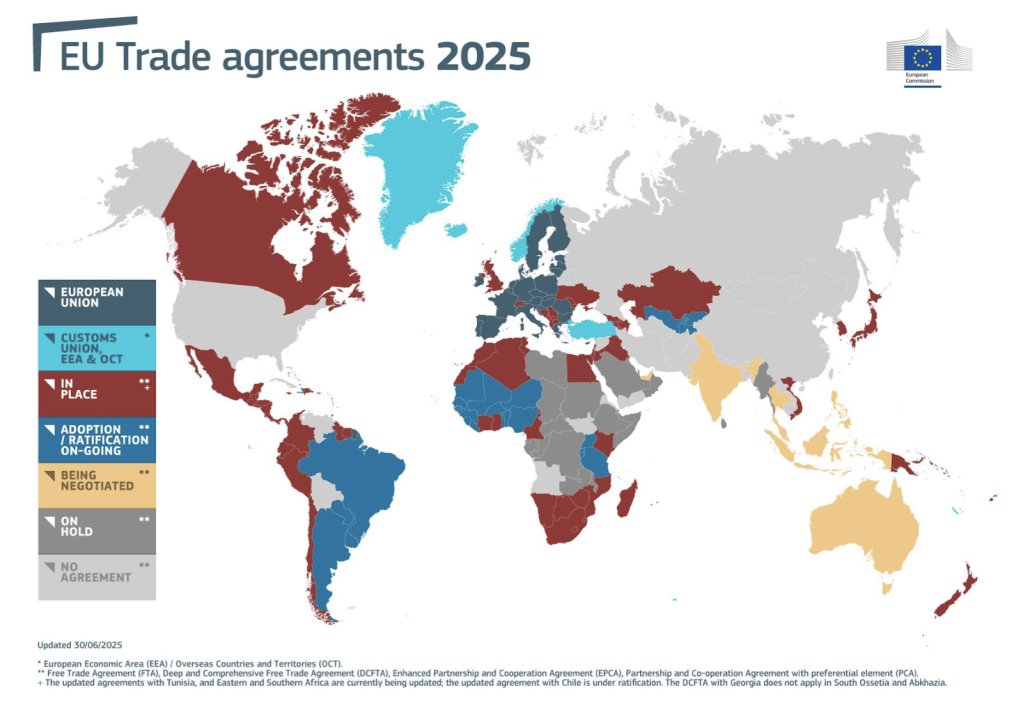
Figure 1: EU’s Trade Agreements Map, source
Seizing the Moment, Facing the Tasks Ahead
Since the inauguration of Trump’s second term, a window of opportunity has opened up for the EU to become the leader of the rule-based order. The maintenance of this order is of critical interest to the majority of countries to fend off the great powers’ aggressive behaviour. The rule of law remains the biggest weapon of the weak, and the European Union has the political and economic power to guide the other nations in their fight against the open defiance of the international order of the great powers.
As the world becomes more unstable, reaching agreements with other partners is not only a way of achieving economic security for the EU, but also a means to increase its political relevance. As the global influence of the GDPR shows, the EU can shape international standards thanks to its regulations. This influence stems from cooperation and mutual agreements, not coercion between partners.
The Commission’s implementation of the Paris Agreement as an essential aspect of its Mercosur agreement introduces a much-needed assertiveness in supporting its political agenda. The inclusion of a sustainability clause is instrumental for two reasons: underscoring the role of the EU as the leader of environmental protection and addressing internal discontent towards the agreement. This type of measure, however, is still largely unused. The recent deal with Indonesia is a clear example of it: the agreement doesn’t address the most important problem for the European Union: the supply of critical materials, especially nickel. This resource, critical for battery production, is currently subject to an export ban towards the EU, but not to the US, which played its cards better. The Union should also stress its role as the biggest foreign direct investor in the world, especially after the shift towards isolationism and transactionalism of the Trump administration and the consequent dismantling of USAID.
Conclusion
The global turmoil offers Europe a unique chance to become a proactive actor in global politics. Whether its policymakers will rise to the challenge remains to be seen. The success of this strategy would bring significant benefits to the EU citizens, sheltering them from the deliberate use of force by other powers and granting them a much-needed hope for a better future. Many agreements are yet to be made, especially with the Gulf Monarchies and other like-minded democracies like Australia.
However, the biggest problem lies within the EU’s institutions: after more than 25 years of negotiations the Council finally agreed to ratify the accord with Mercosur, after a fierce opposition led by France. Less than a week later, the European Parliament voted to uphold the ratification and to send the agreement to the European Court of Justice over legal concerns. Europe stands at a crossroads —its ability to act today will determine whether it remains a spectator or becomes a shaper of tomorrow’s global order.
About the author
Riccardo Mouchanan holds a bachelor’s degree in Political Science from the University of Bologna. He is currently working as a junior policy analyst at the Economic Inclusion Group, an NGO focused on addressing financial exclusion. His interests lie at the intersection of politics, economics, and security. He decided to write this blog post because he deeply believes that the EU’s trade policy could really be a new engine for global relevance and for the preservation of a rule-based order.

