
Read our September Edition
Welcome to the September edition of European Studies Review. This issue explores how Europe is navigating complex landscape of geopolitical competition, technological change, migration, regulation and economic security. From emerging markets and critical resources to borders, enlargement and strategic industries, our contributors examine some of the key challenges shaping Europe’s place in a rapidly changing world.
We begin with analyses of the EU’s fragmented response to the rise of prediction markets and Europe’s evolving approach to critical raw materials, including the relationship between European strategic interests, Africa’s resources and France’s emerging rare earth strategy.
The discussion then turns to some of the regulatory and institutional questions confronting Europe today: copyright and the protection of personal identity, surveillance at the borders of Ceuta and Melilla, institutional learning under the EU Migration Pact, and the challenges surrounding Bosnia and Herzegovina’s path towards EU membership. Together, these articles offer a wide-ranging perspective on how Europe is adapting its institutions, policies and strategic priorities to new political, economic and technological realities.
Read it now ↓
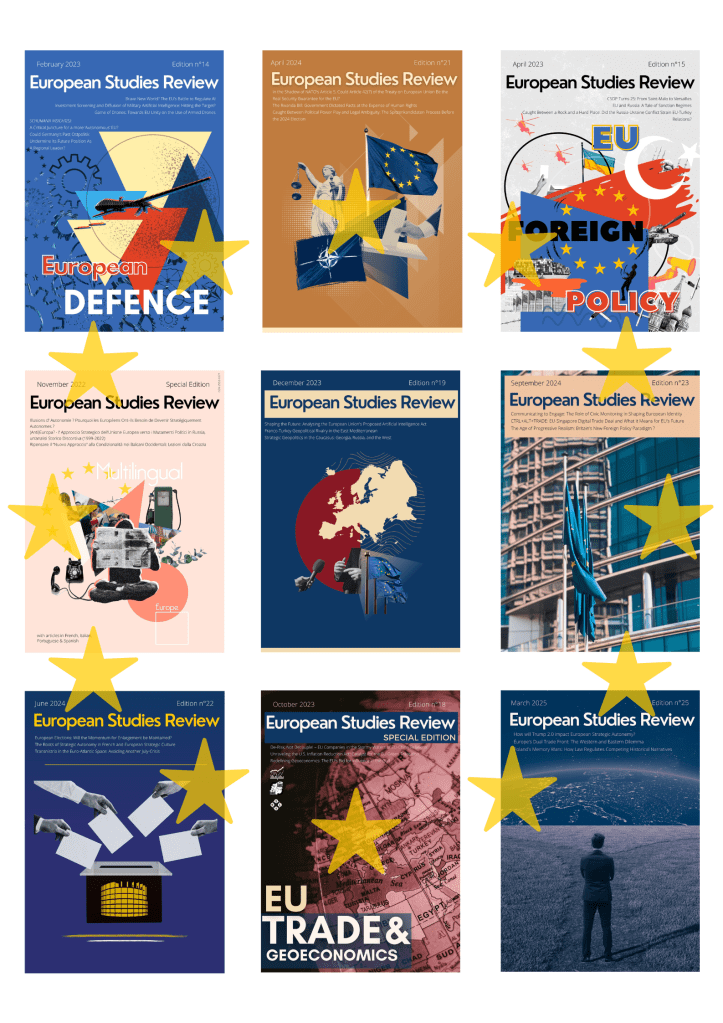
Catch up on our previous editions here

Latest Blog Articles
- Volkswagen’s restructuring and the limits of German social partnership and co-determination By Tarik Dias Hamdan Volkswagen beyond the car industry Major developments are unfolding at Volkswagen in Germany, with implications that go beyond the company itself. Volkswagen is not merely a carmaker: it is one of the central symbols of German coordinated capitalism, built on social partnership between management, workers, trade unions and, in Volkswagen’s case,Continue reading “Volkswagen’s restructuring and the limits of German social partnership and co-determination “
- A Case for Reconnecting UK–EU Energy MarketsBy Jordy Benooit Europe’s decarbonisation strategy increasingly depends on electrification. Transport, heating and cooling, and industry must switch from fossil to electric power, while the energy grids must be fitted to absorb rapidly growing volumes of wind, solar and other low-carbon generation. Focussing on localised energy production and storage alone will not be sufficient. ElectricityContinue reading “A Case for Reconnecting UK–EU Energy Markets”
- When Borders Get Smart: Why Algorithmic Decision-Making at Europe’s Frontiers Threatens Human RightsBy Aleena T Sabu In the past two decades, digitalisation of migration governance has pushed the European Union to allocate more funding towards its border management than ever. Estimates show that there has been an increase of 94% in the funding allocated to border policies in the year 2021-2027 when compared to the previous cycleContinue reading “When Borders Get Smart: Why Algorithmic Decision-Making at Europe’s Frontiers Threatens Human Rights”

Our Partners



About Us
European Studies Review is a peer-reviewed journal which involves students and recent graduates in publishing opinion pieces and research articles regarding European affairs. Run by students and recent graduates, European Studies Review is composed of a team of enthusiastic and passionate young people across Europe.
ISSN 2953-0377

