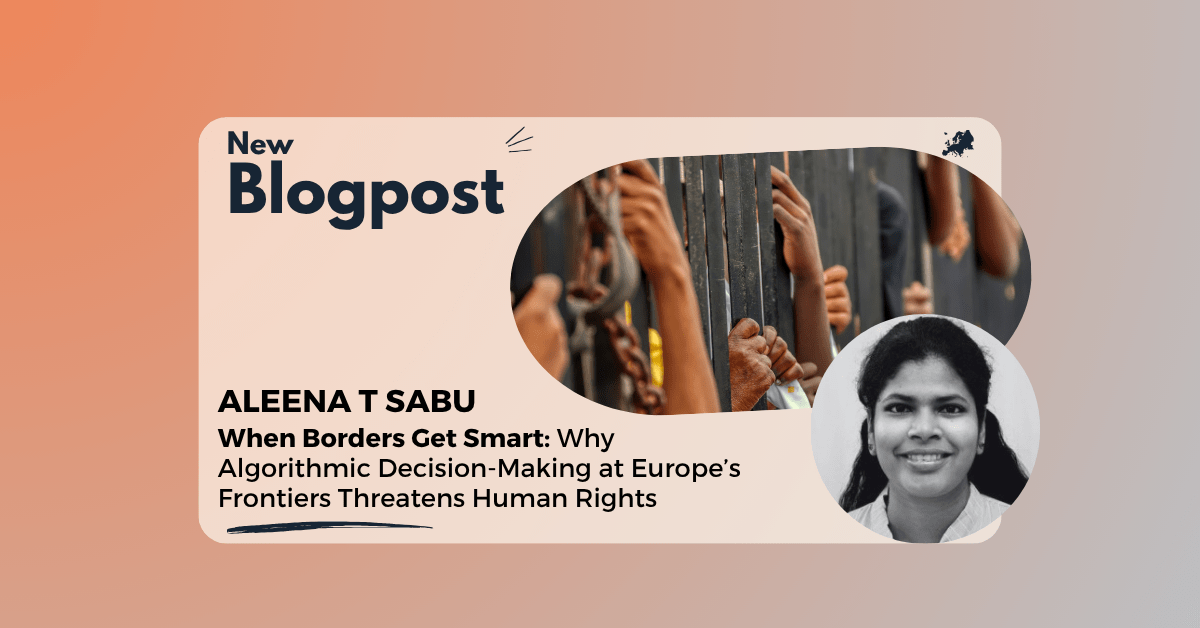
By Aleena T Sabu In the past two decades, digitalisation of migration governance has pushed the European Union to allocate more funding towards its border management than ever. Estimates show that there has been an increase of 94% in the funding allocated to border policies in the year 2021-2027 when compared to the previous cycleContinue reading “When Borders Get Smart: Why Algorithmic Decision-Making at Europe’s Frontiers Threatens Human Rights”
Tag Archives: artificial-intelligence
AI Regulation: Reflections on the Nuclear Analogy and its Utility
By Emily Worlock In 2023, the Centre for AI Safety issued a panel statement that placed the threat of AI on par with nuclear war. Following this, influential figures such as António Gueterres, the Secretary-General of the UN, and Sam Altman, the CEO of Open-AI, voiced support for AI regulatory frameworks inspired by the InternationalContinue reading “AI Regulation: Reflections on the Nuclear Analogy and its Utility”
The Framework Convention on AI: A New Era in Global Tech Governance
By Tamar Vardiashvili On September 5, 2024, the Council of Europe (CoE) introduced the first legally binding international treaty on AI governance, marking a pivotal moment in global technology regulation. This landmark framework establishes unprecedented legal standards for Artificial Intelligence (AI) development, deployment, and oversight across the public and private sectors. Importantly, initial signatories includeContinue reading “The Framework Convention on AI: A New Era in Global Tech Governance”
Global Implications of the EU AI Act: Compliance, Challenges, and Opportunities
By Muhammad Siddique Ali Pirzada The European Artificial Intelligence (AI) Act, which took effect on August 1, 2024, represents a landmark in global AI regulation. As the world’s first comprehensive framework for governing AI, it highlights the European Union’s (EU) ambition to position itself at the forefront of developing safe and trustworthy AI on aContinue reading “Global Implications of the EU AI Act: Compliance, Challenges, and Opportunities”

